Cross Rigid Conveyor Belt – JOYTRANS
Special Conveyor Belt

Cross Rigid
Conveyor Belt

Transverse Rigid. Longitudinal Flexible.
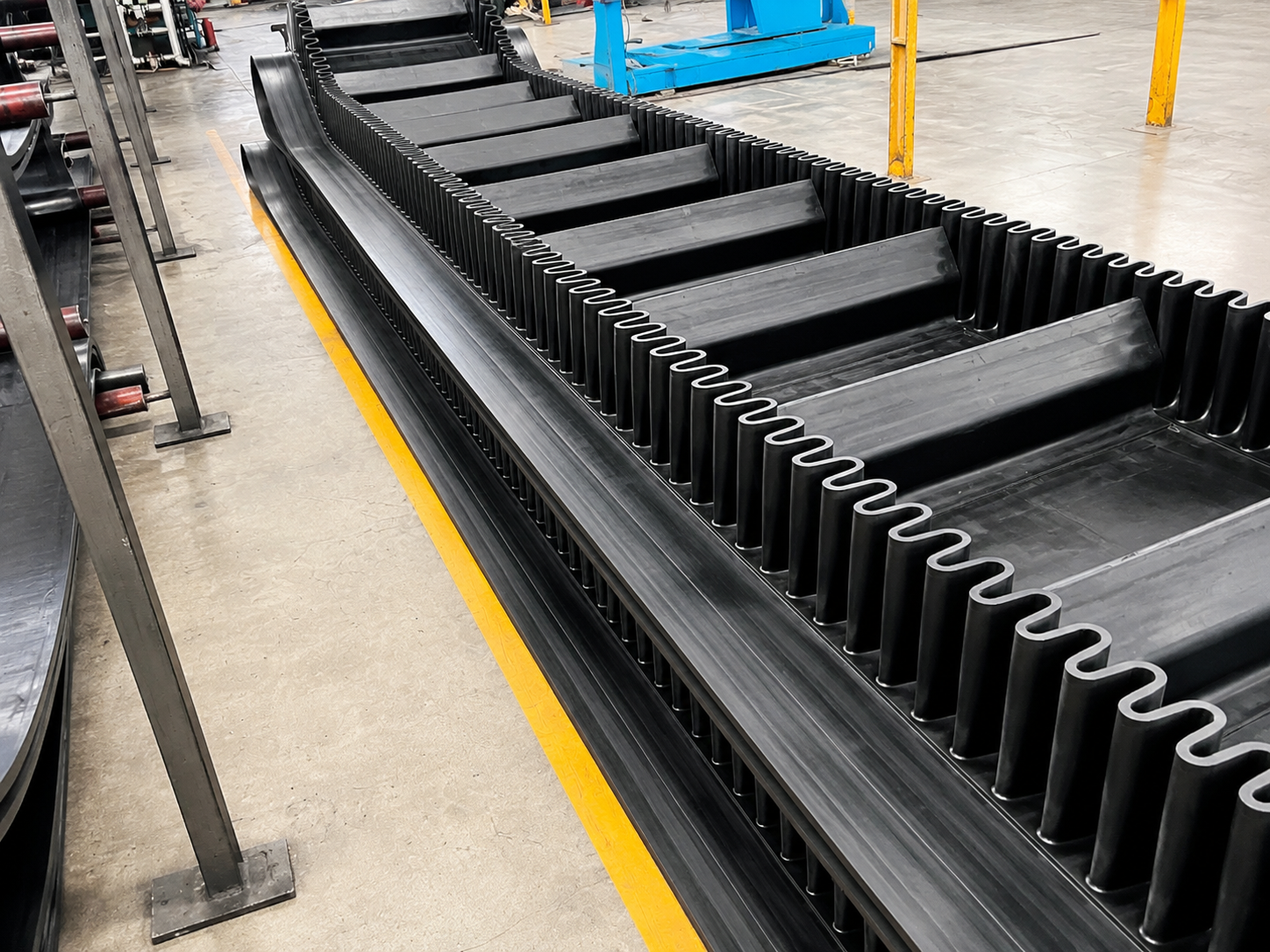
Prevent Belt Collapse
Excellent Rip Protection
Ideal For Sidewall Conveyor Systems
Up To 75° Inclined Conveying
Cross Rigid Conveyor Belt
75°
Max Incline Angle

Product Overview

Cross Rigid Conveyor Belt

Engineered for high-impact, steep-incline applications where standard belts fail — the cross rigid belt combines a rigid transverse carcass with longitudinal flexibility for unmatched structural stability.
01
Excellent Rip Protection & Impact Resistance
The reinforced carcass absorbs sudden shock loads and resists ripping, keeping belt integrity intact even under severe material impact.
02
Minimizes Carcass Damage From Sharp Objects
High-density transverse yarns act as a protective shield, preventing sharp rocks or debris from penetrating or deforming the belt body.
03
Prevents Lengthwise Tearing From Foreign Objects
Cross-rigid reinforcement stops sharp objects caught between the belt and equipment from tearing the belt longitudinally — a leading cause of belt failure.
Cross Rigid Conveyor Belt
Structure Type
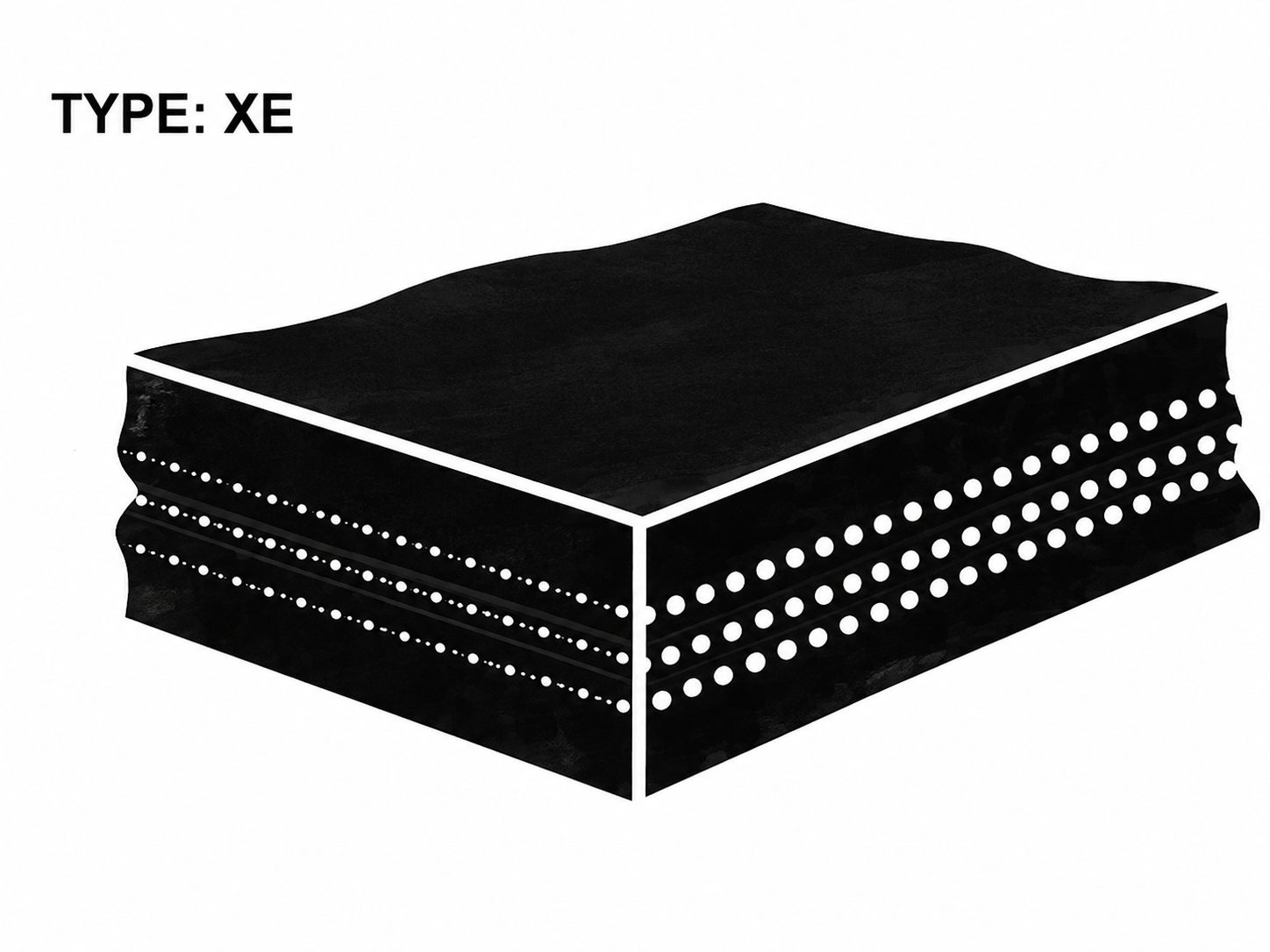
TYPE : XE
XE Belt Structure

Single cross-rigid reinforcement layer. Delivers core transverse rigidity for standard sidewall and cleat belt applications with efficient material consumption.
Structure Type
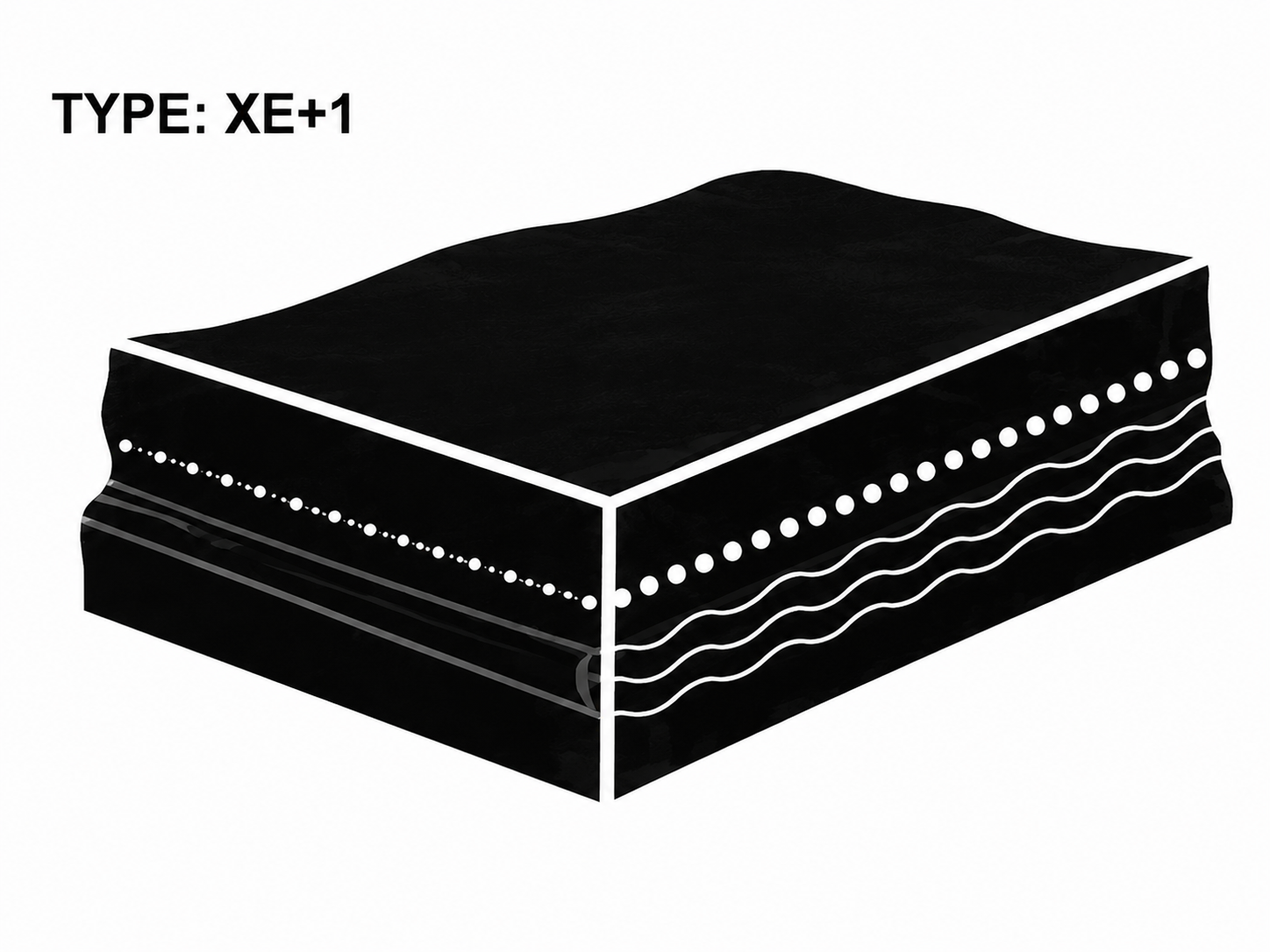
TYPE : XE+1
XE+1 Belt Structure

One additional breaker ply on top of the XE base. Improves tear resistance and impact absorption — recommended for medium-intensity mining and port applications.
Structure Type
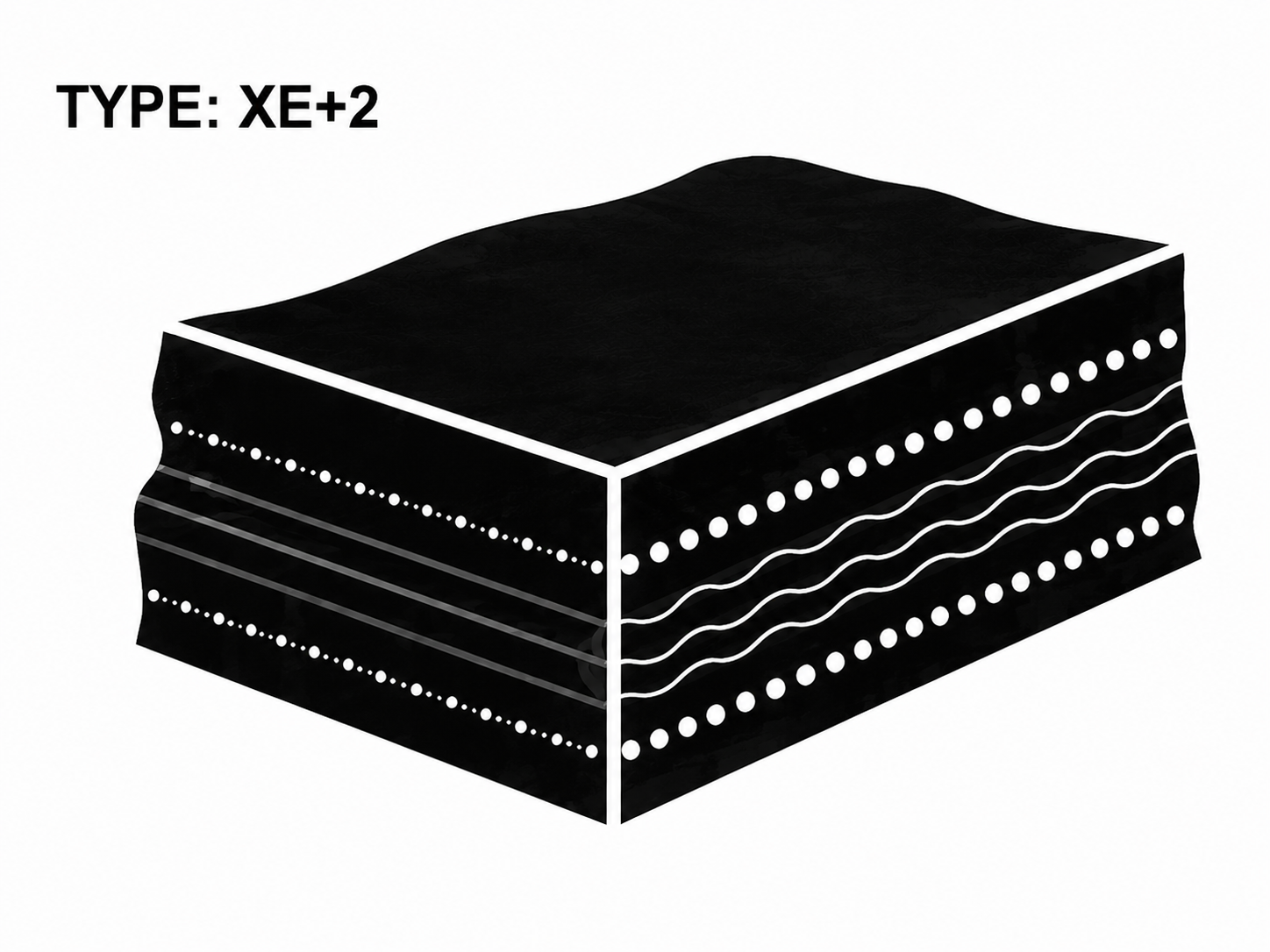
TYPE : XE+2
XE+2 Belt Structure

Two separate cross-stabilized breaker plies. Maximum structural protection for heavy-duty, high-impact environments — large mines, quarries, and steel plants.

Cross Rigid conveyor belts are engineered to bend efficiently in a longitudinal direction while maintaining high rigidity across the transverse axis — achieved by reinforced monofilament fabric that forms a high-tension fabric carcass. Unlike conventional troughing belts that sag and deform under load, this belt stays flat and rigid across its full width, making it the definitive choice for sidewall and cleat conveyor systems operating at inclined angles up to 75°.

X= Cross-Stabilized Construction
E= Polyester Tension Plies
+1= One Ply of Cross-Stabilized Reinforcement
+2= Two Separate Cross-Stabilized Breaker Plies
Cross-Rigid Belt — Stays Flat
FLAT — STABLE — SUPPORTED
Standard Belt — Sags & Collapses
SAG — COLLAPSE — EDGE FAIL

Need to identify the right belt type for your application? Our engineers are ready to help.

Get a Free Belt Consultation

Technology Deep-Dive

How Cross Rigid Works

The cross rigid belt solves a problem that standard conveyor technology cannot — maintaining a flat, rigid belt body during inclined transport while still wrapping smoothly around drive and return pulleys.
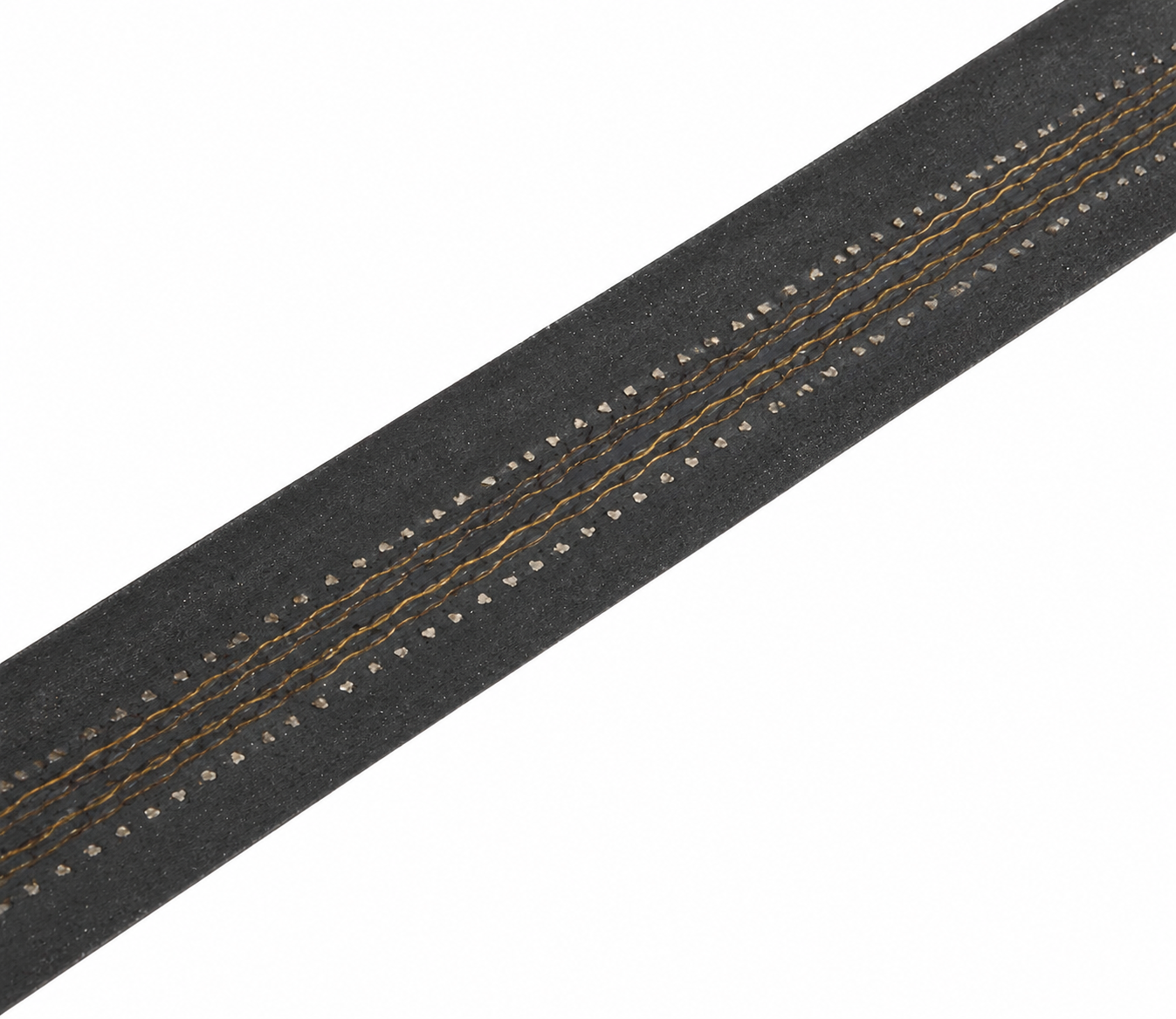
Cross Rigid Belt Internal Structure
Internal Carcass Architecture
Transverse Direction
Rigid Across
The Width
High-tension monofilament yarns run perpendicular to belt travel. These transverse yarns resist lateral deformation, preventing the belt from forming a trough shape and keeping sidewalls and cleats perfectly upright — even on steep inclines up to 75°.
Longitudinal Direction
Flexible Along
The Length
Standard polyester tension plies run in the belt's travel direction, maintaining the flexibility required for the belt to wrap around pulleys and follow the conveyor path efficiently without cracking or delamination.
TRANSVERSE — RIGID LONGITUDINAL — FLEXIBLE
Two-Axis Engineering
  • Monofilament cross yarns provide high stiffness in the width direction, preventing belt sagging and trough formation.
  • Polyester tension plies remain flexible longitudinally, allowing normal wrap around pulleys without cracking.
  • The combination creates the only belt geometry compatible with corrugated sidewalls and cleats on steep angles.

See how this structure performs in your specific application — speak with an engineer.

Discuss Your Application

Anti-Collapse Engineering

Why It Does Not Collapse

Belt collapse is the root cause of sidewall tearing, cleat failure, and unplanned downtime in steep-incline conveying. Here is exactly why the cross rigid belt eliminates it.

✕   Standard Conveyor Belt
SAG & COLLAPSE
Belt forms a trough between idlers — sidewalls lean inward and lose upright position.
Sidewall base attachment fails due to repeated lateral flexing, accelerating delamination.
Cleats tilt with the belt surface, reducing containment angle and causing material spillage.
Belt edge rolls under load — increasing edge wear and reducing effective belt width.
✔   Cross Rigid Conveyor Belt
FLAT & STABLE
High-tension transverse yarns hold the belt flat — zero trough formation across the full width.
Sidewalls maintain a perfectly vertical position, preventing premature base bond failure.
Cleats stay perpendicular to the belt surface — retaining full material containment at any incline.
Uniform edge support eliminates rolling and lateral shift under load.

Technical Explanation

01
How Transverse Yarns Support the Belt
Monofilament cross yarns act like rigid ribs spanning the full belt width. When load is applied, these yarns carry the lateral force and distribute it evenly — preventing the center from sinking toward idlers and maintaining a consistent flat profile along the entire carrying run.
02
Why The Flat Profile Is More Stable
Conventional troughing belts rely on idler angles to form a cross-section, requiring lateral flexing that conflicts with sidewall rigidity. Cross rigid belts stay flat — the rigid carcass geometry is inherently more stable, reduces material migration, and allows corrugated sidewalls to function as intended.
03
Why It Is Ideal for Sidewall Belts
Sidewall conveyor systems demand a base belt that does not deform laterally. The cross rigid carcass provides the transverse stiffness that keeps sidewall attachment stress within safe limits at all operating angles, enabling reliable steep-incline conveying from 30° up to 75°.

Stop replacing failed sidewall belts. Get a cross rigid base belt built for the demands of your system.

Request a Sample or Quote

System Compatibility

Built For Sidewall Conveyor Systems

Cross rigid base belts are purpose-engineered to work in complete harmony with every component of a sidewall conveyor system — from corrugated walls to cleats and everything in between.

Sidewall Conveyor Belt System
Sidewall Conveyor System
Sidewall (Corrugated Wall)
The flat, rigid belt surface provides a consistent, stress-free bonding base for corrugated sidewalls. With no lateral flex in the base belt, wall attachment integrity is preserved over the full service life.
Cleat (Transverse Partition)
Cleats bonded to a flat, rigid base stay perpendicular to the carrying surface under load. This keeps effective cell volume consistent, preventing material rollback on steep gradients up to 75°.
Base Belt (Carrier Structure)
The cross rigid base belt is the structural foundation. Its high transverse stiffness distributes load uniformly, reducing per-unit stress on the carcass and extending service intervals significantly.
Corrugated Wall Profile
The corrugated profile requires a non-deforming base to maintain its geometry around pulley curves. Cross rigid is the only carcass type that fully accommodates this without compromising wall shape.
Sidewall Height
Custom heights from 40 mm to 800 mm to match material volume and incline requirements.
Cleat Profile
TC, TCS, and custom cleat shapes. Spacing engineered to your material flow rate and angle.
Incline Angle
Tested for 30° to 75°. Vertical conveying configurations available on request.
Belt Width
Standard widths 300–2400 mm. Custom dimensions to match your system frame.

Ready to configure a complete sidewall conveyor solution? Tell us your angle, width, and material — we'll handle the rest.

Configure Your Sidewall System

Engineering Data

Technical Specifications

Full-range customization backed by ISO-certified manufacturing. Every parameter can be matched to your operating conditions.

Cross Rigid Belt — Core Parameters
Belt Width
300 – 2400
mm
Tensile Strength
EP125 – EP630
N/mm per ply
Max Incline Angle
Up to 75°
degrees
Structure Types
XE / XE+1 / XE+2
Cross-stabilized constructions
Carcass Material
EP + Monofilament
Polyester tension + cross-rigid yarn
Application
Sidewall & Cleat
Base belt for inclined systems
Abrasion Resistant
Grade M / S cover rubber. Extends belt surface life in high-wear material handling — mining, quarry, recycling.
Heat Resistant
T1 / T2 / T3 grades. Suitable for materials up to 200°C — cement, sintering, and foundry applications.
Oil Resistant
L grade cover compound. Resists swelling and degradation from oily or greasy bulk materials.
Flame Resistant
Antistatic and fire-retardant compound. Required for underground mining, tunnels, and coal handling.
OEM
OEM Customization Available
Belt structure (XE / XE+1 / XE+2)
Belt width — any dimension
Cover thickness (top and bottom)
Sidewall height and profile type
Cleat shape, spacing, and height
Cover grade (abrasion / heat / oil / flame)
Edge type (molded or cut)
Joint and splice configuration

Share your system parameters and we will return a complete belt specification within 24 hours.

Submit Your Technical Requirements

Manufacturing Capability

Factory &
Manufacturing

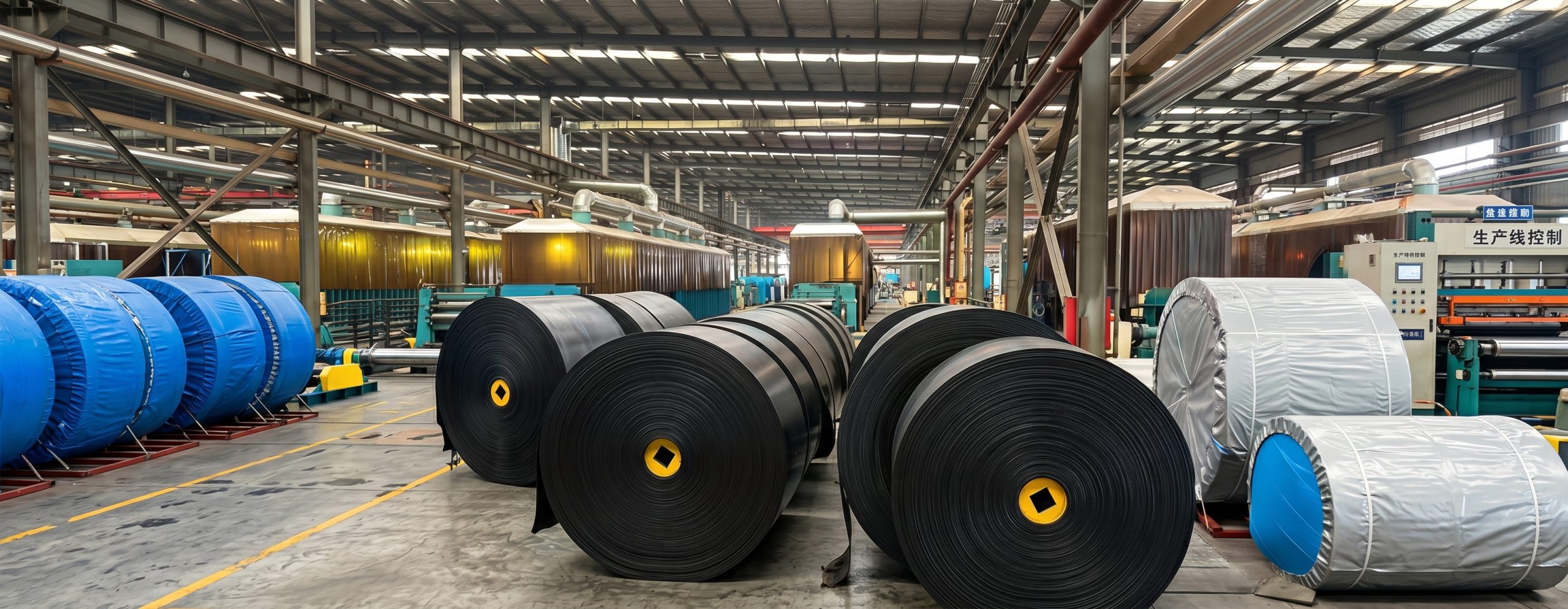
Cross rigid belts demand more from manufacturing than standard conveyor belts. Every layer of the carcass must be positioned with exact dimensional accuracy — because misalignment at the fabric level directly reduces transverse rigidity in the finished belt.
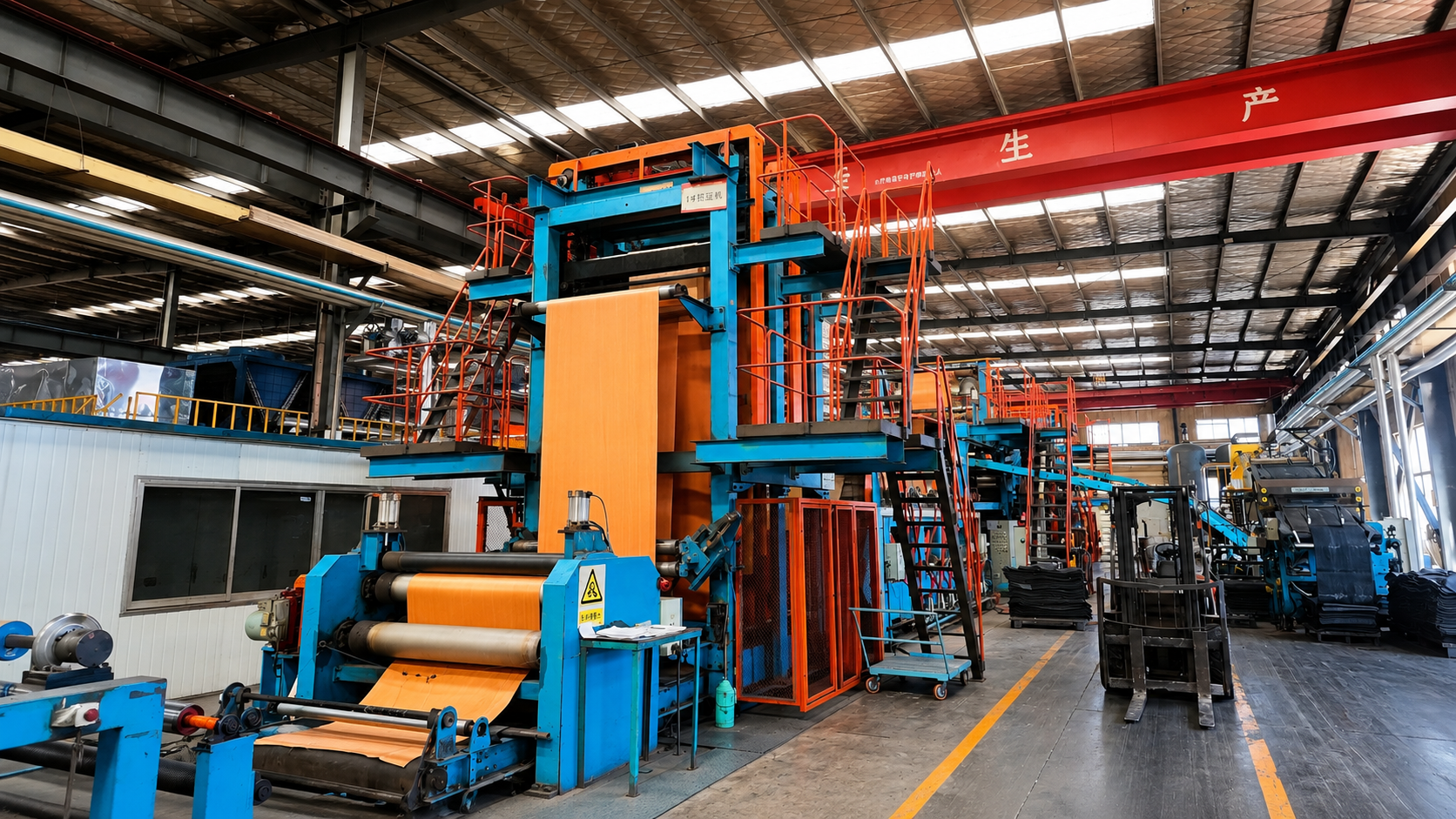
01
Monofilament Fabric Weaving
High-precision weaving lines produce the monofilament cross-rigid fabric. Yarn tension, density, and weave angle are controlled to specification on every roll — the starting point for a belt that delivers consistent transverse stiffness.
Calendering 02
Calendering
Rubber compound is precision-calendered onto both faces of the fabric under controlled temperature and nip pressure. Uniform rubber penetration is verified at each production stage for optimal bond quality.
Vulcanization 03
Vulcanization
The full belt body is vulcanized in temperature- and pressure-controlled presses. Cure cycle parameters are matched to the specific compound, belt thickness, and carcass construction for optimal interply bond strength.
Cross Rigid Building 04
Cross Rigid Building
Layer-by-layer belt assembly on flat building tables. Each cross-rigid ply is laid perpendicular to the EP tension plies with measured alignment — a dedicated process step not found in standard belt production lines.
Quality Inspection 05
Quality Inspection
Every finished belt undergoes tensile strength testing, dimensional verification, surface hardness checks, and adhesion pull-off tests between carcass layers. Test certificates are issued with every shipment.
Carcass Alignment Control 06
Strict Carcass Alignment Control
Carcass layer alignment is verified at each building step using laser reference lines and width gauges. Misalignment tolerance held within ±2 mm — ensuring the transverse rigidity specification is met in every single belt produced.
Process Differentiator
Strict Carcass Alignment Control — Built Into Every Step
The cross rigid belt's value lives entirely in its carcass. Unlike surface-level quality controls, our alignment verification protocol targets the internal structure at every build stage — ensuring that the performance you specify on paper is the performance you receive in the field, belt after belt, order after order.
20+
Years Manufacturing
50+
Export Countries
ISO
9001 / 14001 / 45001
3
Invention Patents

Want to see the production process firsthand? We welcome factory visits and video audits — no pre-conditions.

Request a Factory Audit

Common Questions

Frequently Asked Questions

Technical questions from engineers and procurement teams — answered clearly, without jargon.

01 What is the difference between XE and XE+2?
XE belt has one layer of cross rigid reinforcement providing the core transverse rigidity. XE+2 belt adds two separate cross-stabilized breaker plies, delivering higher tear resistance, better impact absorption, and improved structural stability for heavy-duty applications such as large mines, quarries, and high-impact bulk handling operations.
02 Why is cross rigid belt used in sidewall conveyors?
Cross rigid belts provide high transverse stiffness while remaining flexible longitudinally. This design actively supports the sidewalls and cleats, keeping the belt stable during steep incline conveying and preventing the base belt from collapsing — the primary failure mode for standard belts in sidewall conveyor applications.
03 Can cross rigid belt prevent longitudinal ripping?
Yes. The reinforced carcass structure significantly reduces the risk of longitudinal ripping by creating a dense fabric barrier against sharp-object penetration. The primary function is transverse rigidity — but for maximum anti-rip performance in extreme conditions, additional breaker layers or steel cord reinforcement can be specified alongside the cross rigid structure.
04 What inclination angle is supported?
Cross rigid sidewall conveyor belts are commonly used for angles from 30° up to 90° (vertical conveying), depending on sidewall height, cleat design, and material characteristics. The cross rigid base belt itself is rated for inclines up to 75°. Sidewall height and cleat profile selection determine the practical maximum angle for a given material and throughput requirement.
05 Can you customize sidewall conveyor belts?
Yes. Every parameter can be customized to match your application and working conditions:
  • Width, sidewall height, cleat type and spacing
  • Belt tensile strength (EP125 – EP630)
  • Cover grade and top/bottom cover thickness
  • Edge type and joint/splice configuration
06 Which industries use cross rigid belts most?
Cross rigid belts are widely deployed across industries requiring steep-incline or high-impact bulk material conveying:
  • Cement plants and building material processing
  • Mining and quarry operations
  • Ports and bulk material handling terminals
  • Power plants and coal handling systems
  • Steel plants and recycling facilities
  • Fertilizer, chemical, and grain handling systems
Have a Question Not Listed Here?

Our technical team responds to all belt engineering enquiries within 24 hours. Share your application details and we will provide a clear, specific answer.

Send Us Your Question