Nylon Cord Tire Fabric
Screening Belt
High Flexibility & Long Service Life for Screening Systems
Engineered with tire cord fabric reinforcement for superior impact resistance, dimensional stability, and consistent screening efficiency — purpose-built for the most demanding light-material separation environments.
Four Configuration Types,
One Engineered Platform
Built on a nylon tire cord fabric skeleton, each configuration is optimized for a different screening environment — from bare-back flexibility to patterned-surface grip. Match the right structure to your process and unlock lower downtime, better throughput, and longer belt life.
A single nylon tire cord fabric layer forms the reinforcement frame. Delivers exceptional flexibility and rebound — ideal for high-frequency vibrating screens where the belt must conform continuously without fatigue. Reduces energy consumption and extends service cycles vs. multi-ply textile alternatives.
The non-working surface is left bare (fabric-exposed) while the working face retains full rubber coverage. Increases contact grip on the screen deck, reduces belt lift-off, and allows heat dissipation from the underside — significantly extending usable belt life in high-load screening applications.
Both working and non-working surfaces expose the fabric layer. This ultra-thin, ultra-light configuration is engineered for lightweight material conveyance where minimizing belt weight is critical. Open fabric surfaces allow maximum airflow and rapid moisture evaporation, preventing material adhesion and slippage.
A specially textured canvas applied to the cover rubber forms a patterned working surface. The molded pattern provides directional grip, prevents fine material migration, and maintains screening precision at higher inclination angles — purpose-built for grain, seed, and granular specialty-material screening lines.
Not sure which configuration fits your screening system? Our engineers will assess your application and recommend the optimal structure — at no cost.
Request Free Engineering ConsultationSix Performance Reasons
Buyers Choose Tire Cord
Tire cord fabric is the same material engineered to survive millions of road-impact cycles in pneumatic tires. Applied to conveyor belt construction, it delivers performance characteristics no conventional woven textile can match.
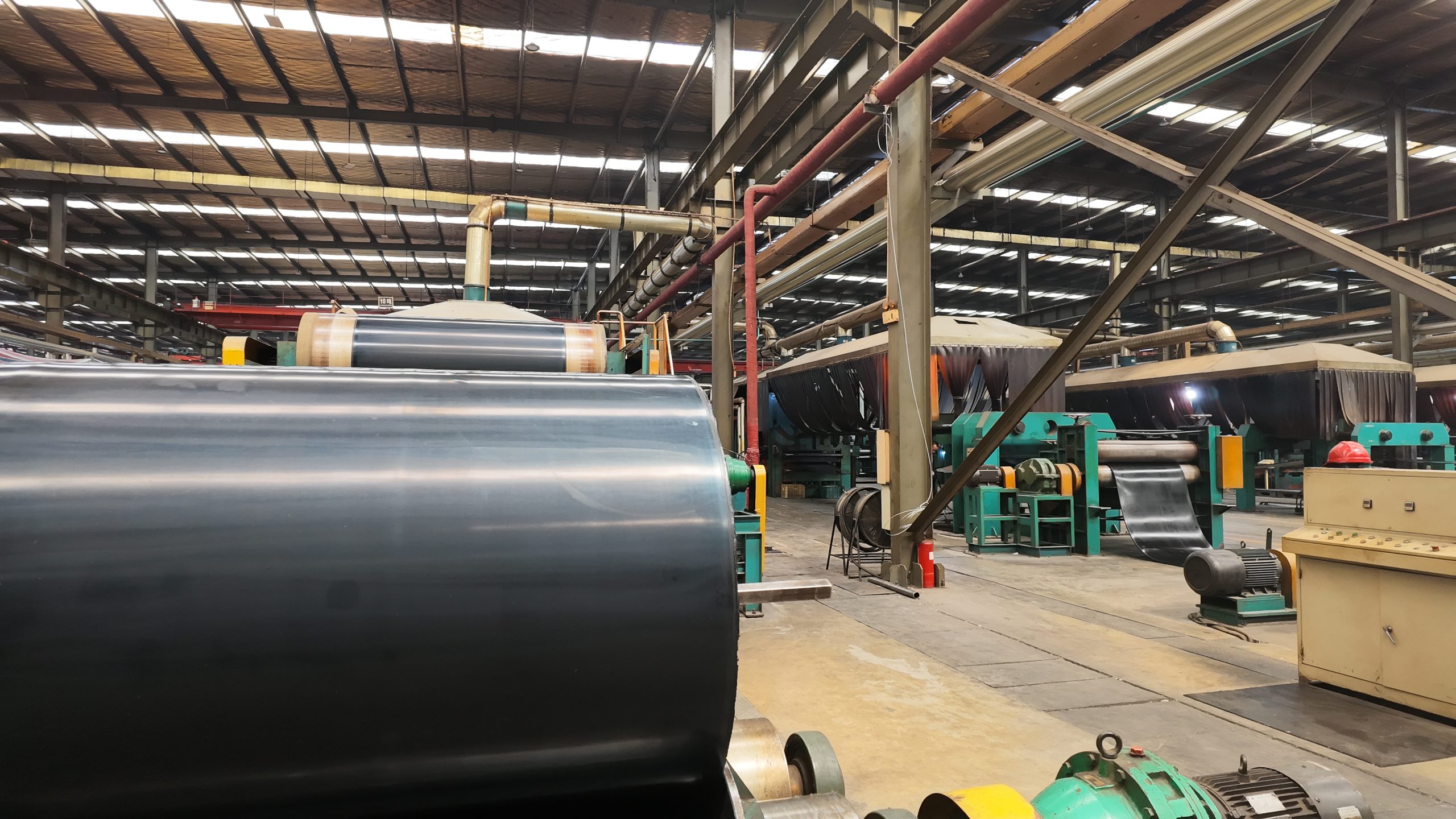
Tire cord nylon filaments are drawn under high tension, creating a molecular alignment that delivers tensile strength far exceeding standard EP or NN fabric. Your belt handles higher loads, longer center distances, and heavier material streams — without stretching, necking, or breaking under peak-demand conditions.

Screening belts flex millions of times per day over pulleys, idlers, and screen decks. Tire cord fabric is engineered from the ground up to resist flex-induced fatigue failure — significantly fewer delaminations, reduced cracking at pulley wrap points, and a belt that outlasts conventional alternatives by a measurable margin.
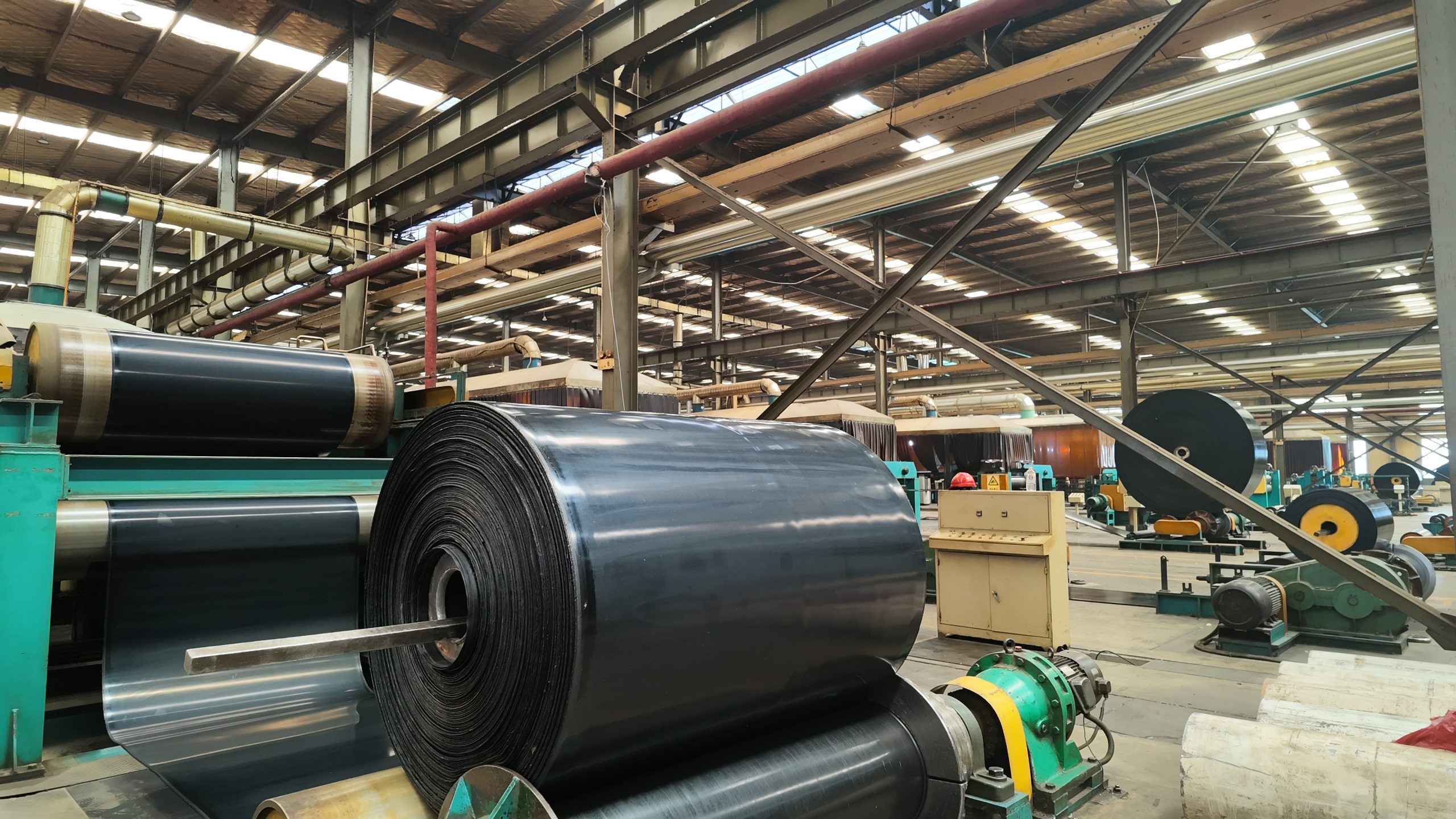
Belt stretch is the enemy of screening precision. Tire cord fabric maintains its length under load, preserving tensioner settings, reducing take-up travel requirements, and ensuring consistent belt tracking throughout the belt's entire service life. Less re-tensioning means less maintenance downtime and lower labor cost per operating hour.
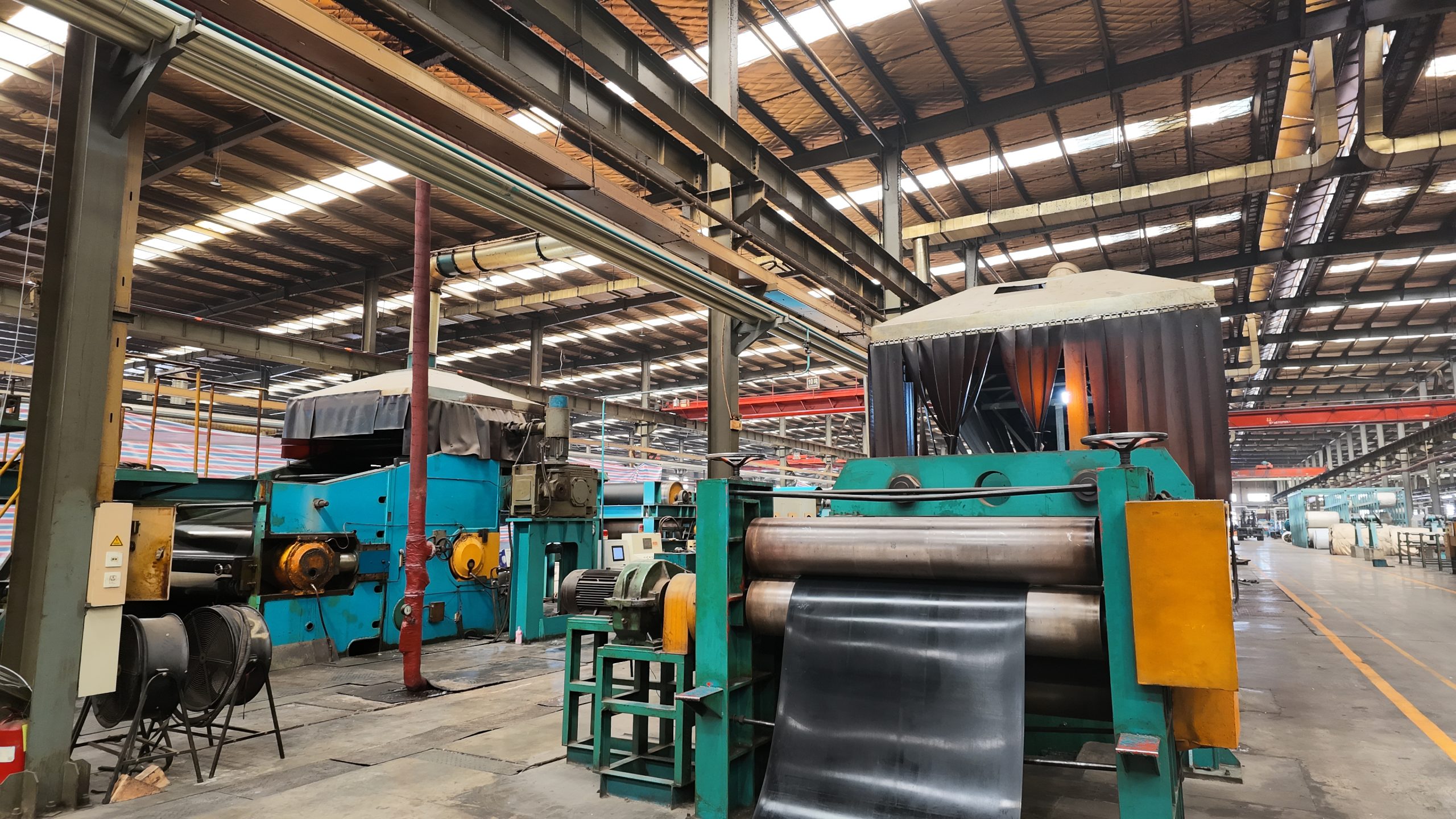
At loading and transfer points, falling material exerts sharp, concentrated impact forces that split conventional belt covers. The bias-angle tire cord structure distributes these impact energies across a wide fabric zone, preventing penetration damage and protecting belt integrity even under high-drop, high-mass loading conditions.
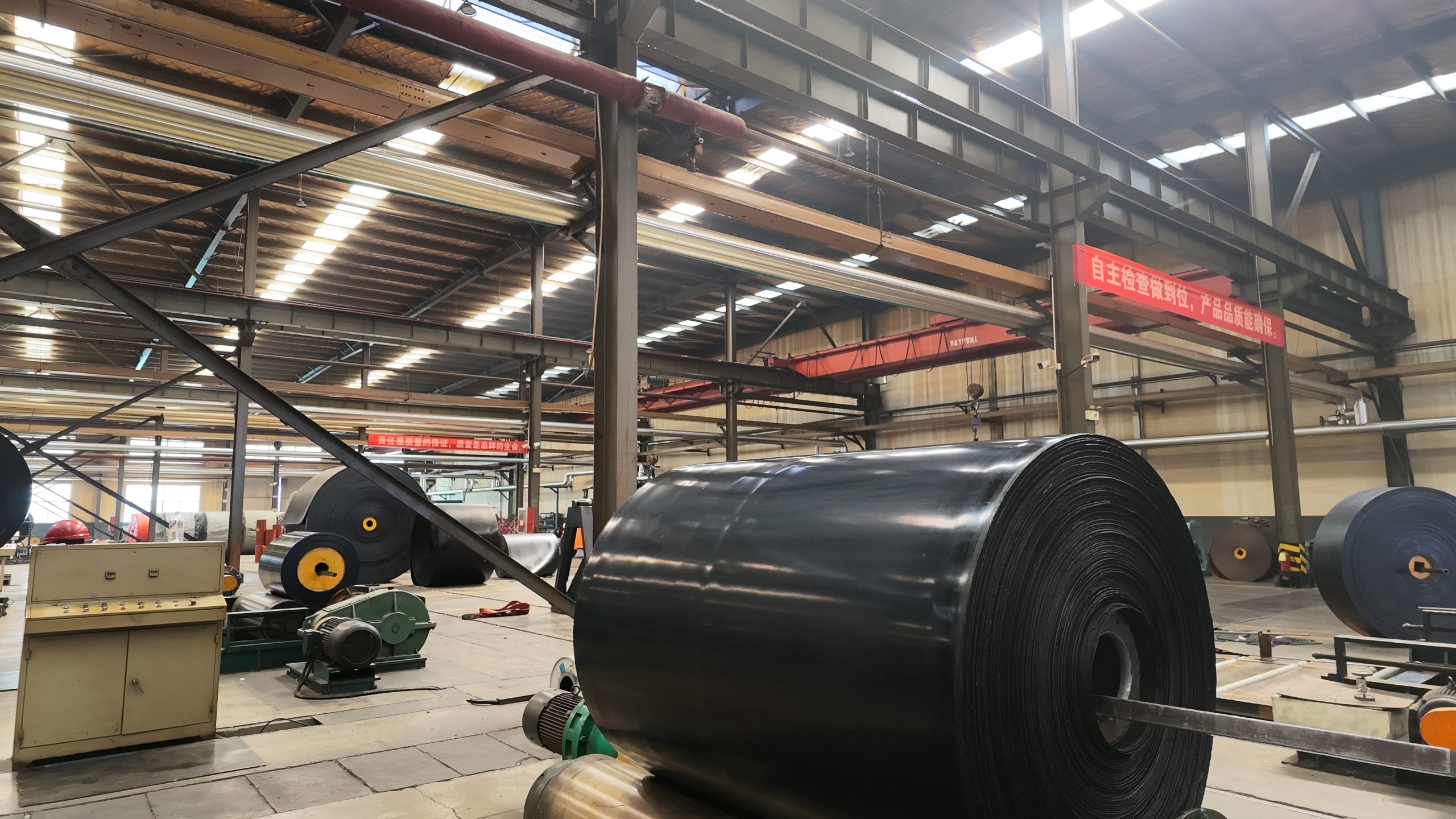
The combined benefits of high strength, low elongation, and superior fatigue resistance translate directly into a longer operating lifespan. Procurement teams report 30–50% longer replacement intervals compared to traditional NN fabric belts in equivalent screening applications — reducing total cost of ownership and unplanned shutdown frequency.
Dimensional stability is critical for accurate particle separation. Because the tire cord belt resists stretching and distortion, aperture geometry stays consistent across the full belt width throughout its service life. Particle size distribution remains tight and predictable — maintaining product quality standards from the first hour of operation to the last.
See how tire cord technology can extend your belt change intervals. Request a side-by-side performance comparison for your specific application.
Get Performance Comparison ReportEngineered to Spec,
Built to Perform
Every parameter of the nylon cord tire fabric screening belt is engineered around real screening-system demands. Review the standard specification range below — all dimensions and grades can be customized to your exact equipment and operating environment requirements.
| Belt Width | 300 – 2200 mm |
| Belt Thickness | Customized (Single / Multi-Layer) |
| Operating Temperature | −20 ℃ to +80 ℃ |
| Applicable Belt Length | Customized to System |
| Fabric Type | Nylon Tire Cord (Bias-Angle) |
| Tensile Strength | Customized to Application |
| Cover Rubber Grade | Abrasion Resistant (Standard) / Custom |
| Surface Type | Standard / Bare Fabric / Patterned |
| Single-Layer Fabric | Standard High-Flex Config |
| Single Bare Back | Enhanced Deck Grip |
| Both Bare Back | Lightweight Applications |
| Patterned Surface | Incline / Precision Screening |
| Chinese Standard | GB/T Compliant |
| International | ISO / DIN Available |
| Quality System | ISO 9001:2015 |
| Third-Party Testing | SGS / BV on Request |
* All specifications represent standard production ranges. Custom widths, tensile classes, cover compounds, and surface profiles are available upon request. Submit your application parameters for a tailored proposal within 24 hours.
Need a specification sheet for procurement approval? Request a customized spec proposal matched to your screening system parameters.
Request Custom Specification SheetTire Cord vs. Traditional Fabric Belt:
The Numbers Don't Lie
When sourcing decisions are justified by data, tire cord fabric consistently outperforms conventional woven textile belts across every metric that matters to plant operators — from tensile performance to total cost of ownership.
| Performance Feature | JOYTRANS Tire Cord Belt Recommended | Traditional Fabric Belt |
|---|---|---|
| Tensile Strength | ★★★★★ | ★★★★★ |
| Impact Resistance | ★★★★★ | ★★★★★ |
| Elongation Control | ★★★★★ | ★★★★★ |
| Flex Fatigue Life | ★★★★★ | ★★★★★ |
| Service Life | ★★★★★ | ★★★★★ |
| Maintenance Cost | ★★★★★ LOWER | ★★★★★ HIGHER |
| Screening Dimensional Stability | ★★★★★ | ★★★★★ |
Ready to see what tire cord fabric delivers in your plant? Request a free sample and run your own comparison before committing to a full order.
Request Free Belt SampleFactory Strength You Can
Verify Before You Order
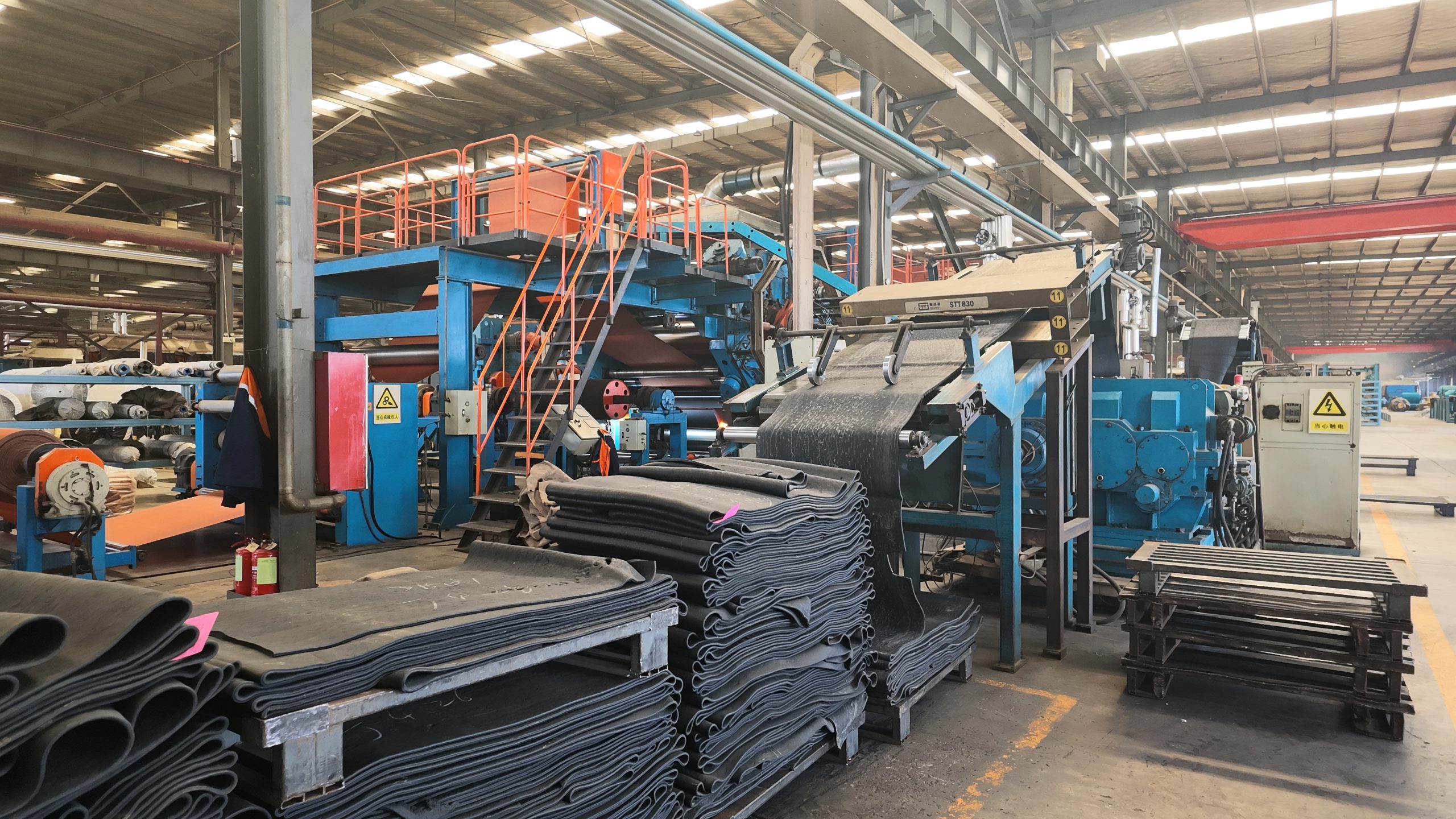
Every tire cord screening belt ships from our 60,000 m² Shandong facility — a vertically integrated production environment where raw material selection, cord processing, calendering, vulcanization, and final quality validation all happen under one roof, under one quality system.
Incoming tire cord nylon fabric and rubber compound batches are sampled and tested against GB/T and ISO tensile, elongation, and adhesion standards before entering production. Only approved lots proceed — no exceptions.
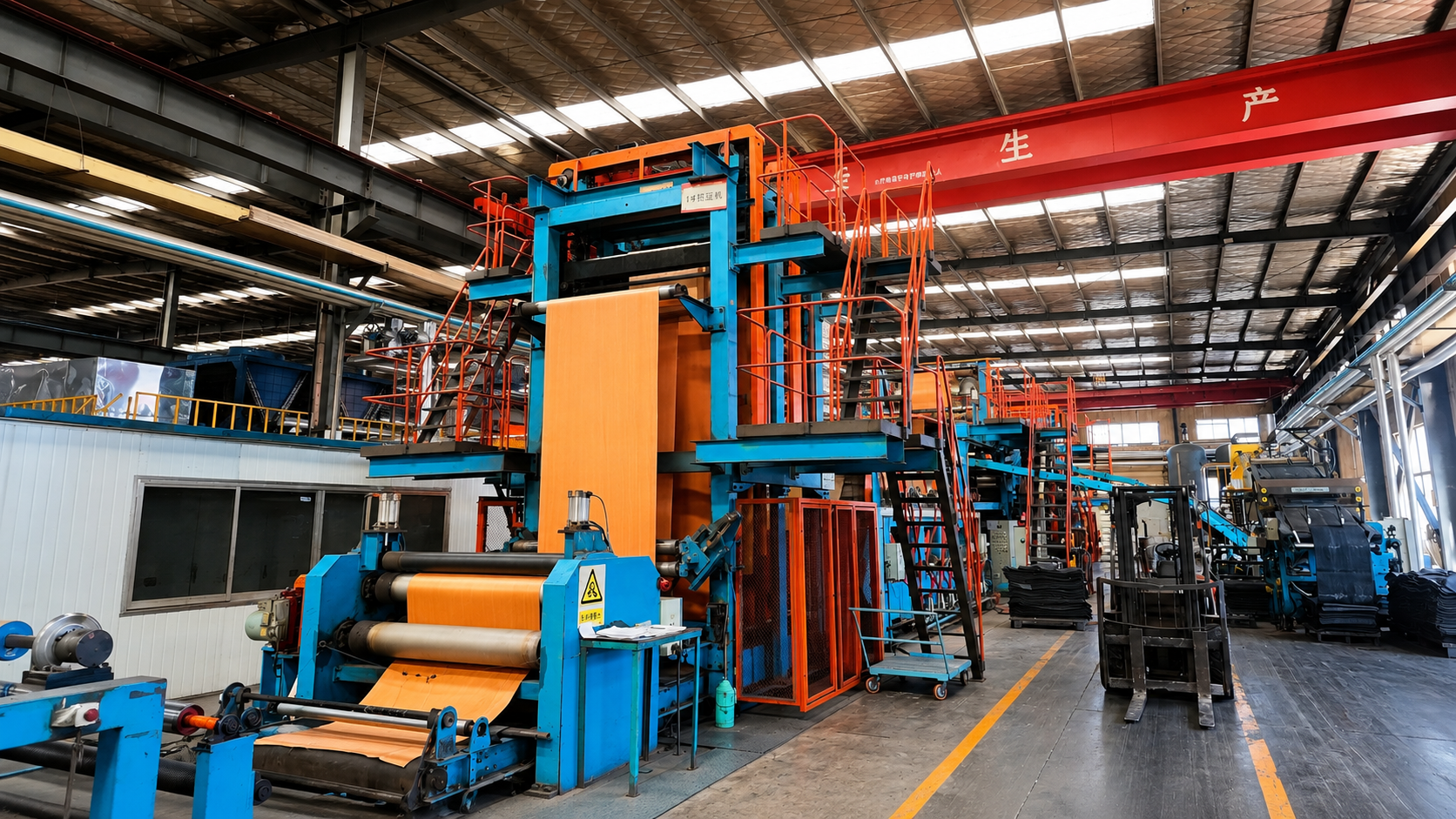
Precision four-roll calenders apply rubber compound to both faces of the tire cord fabric at controlled temperature, pressure, and line speed. This process determines interfacial adhesion — the most critical bond in belt construction.
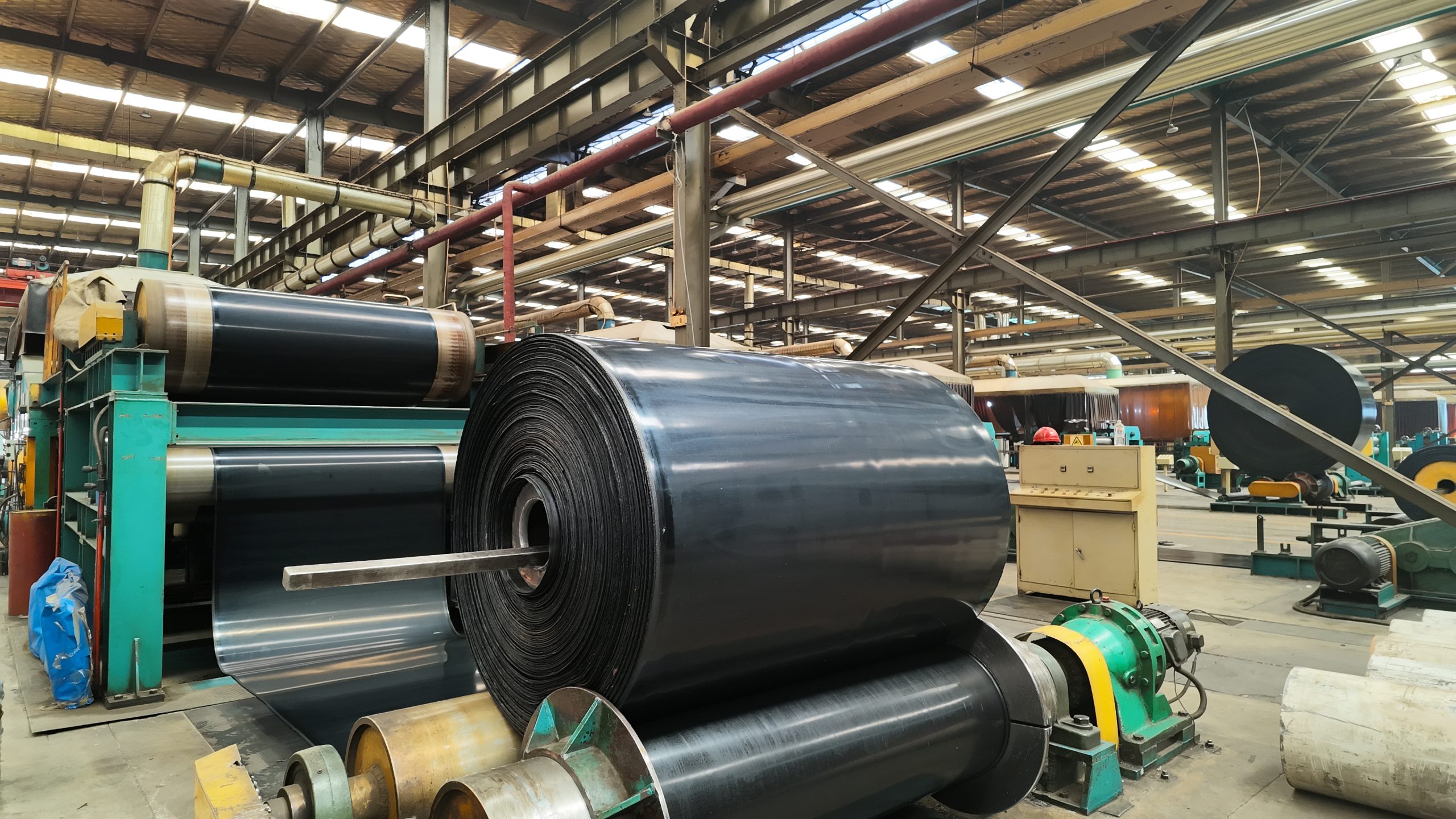
Calendered plies are assembled with cover rubber sheets on automated building lines. Layer alignment, tension uniformity, and ply count are controlled and logged for every belt build. Surface profiling is applied at this stage.
Flat-bed vulcanization presses cure each belt section under precisely controlled temperature, pressure, and dwell time profiles. Cure uniformity across the full belt width is verified by embedded thermocouple records retained with each batch.
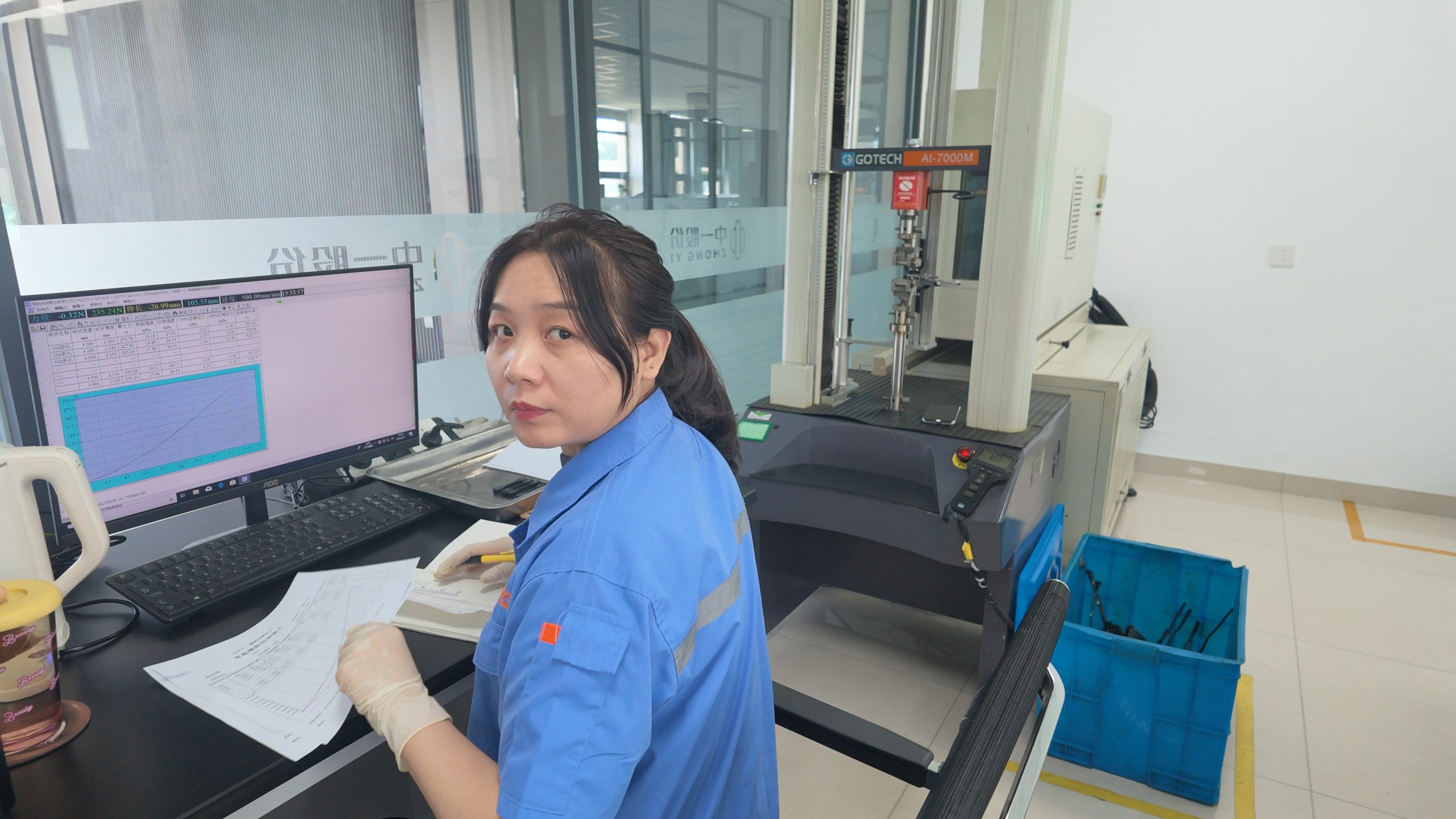
Finished belts undergo full-length visual inspection, thickness measurement, tensile pull testing, and adhesion peel testing. Third-party inspection by SGS or BV is available for export orders upon request.
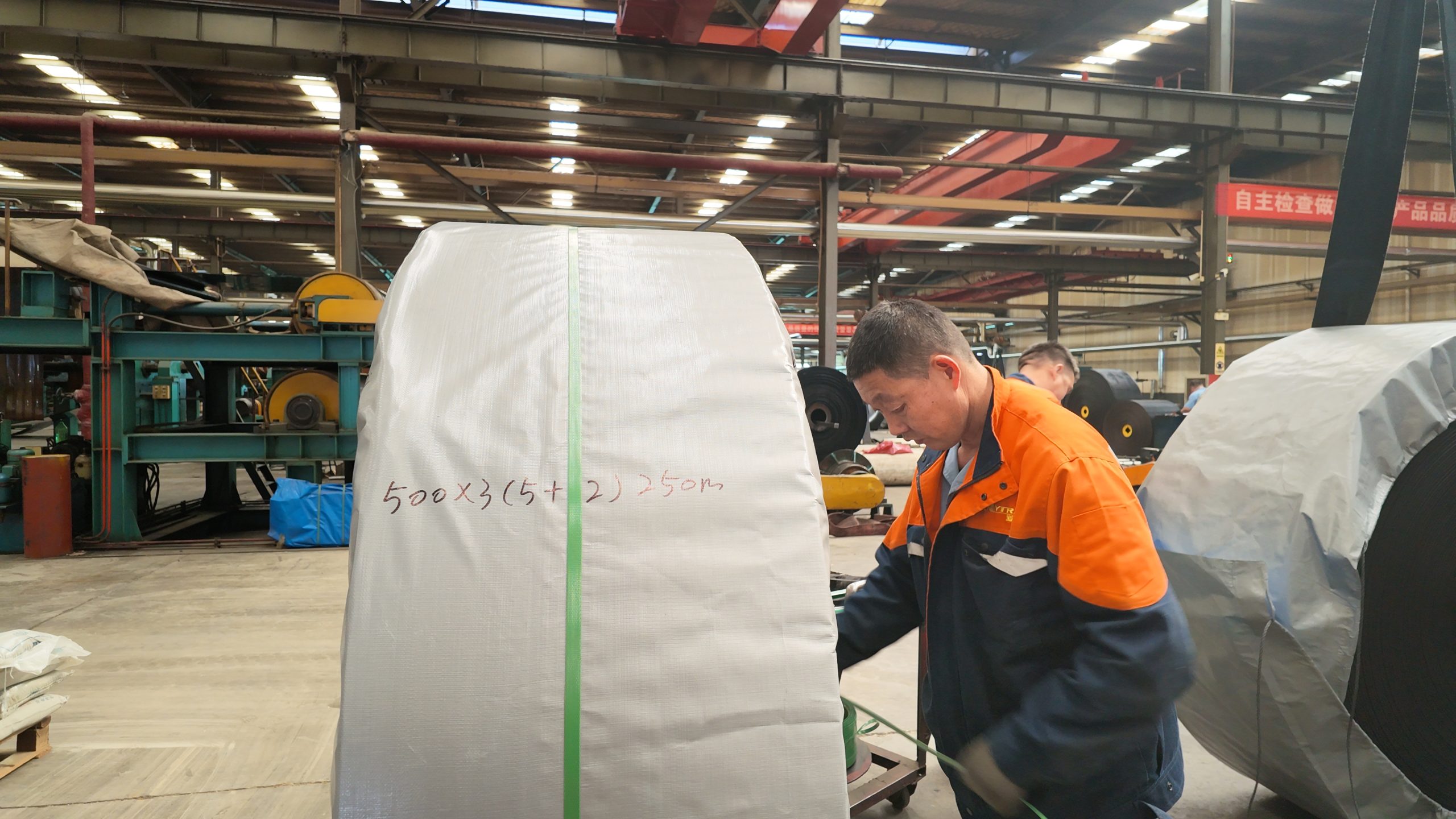
Belts are wound on steel cores, wrapped in waterproof film, and crated for sea or air freight. Full documentation — test reports, packing lists, COO, and material certifications — ships with every order. Standard lead time: 15–25 days.
 Raw Material
 Calendering
 Belt Building
 Vulcanization
 Final Inspection
 Factory
Tell us your belt width, operating conditions, and current change intervals. Our technical team will respond within 24 hours with a specification recommendation and competitive price quotation.
Frequently Asked Questions
Everything buyers, engineers, and procurement teams ask before specifying a nylon cord tire fabric screening belt — answered clearly and completely.
Have a question not answered here? Our technical team responds within 24 hours — send your application details and we will provide a specific, engineering-level answer.
Ask Our Technical Team